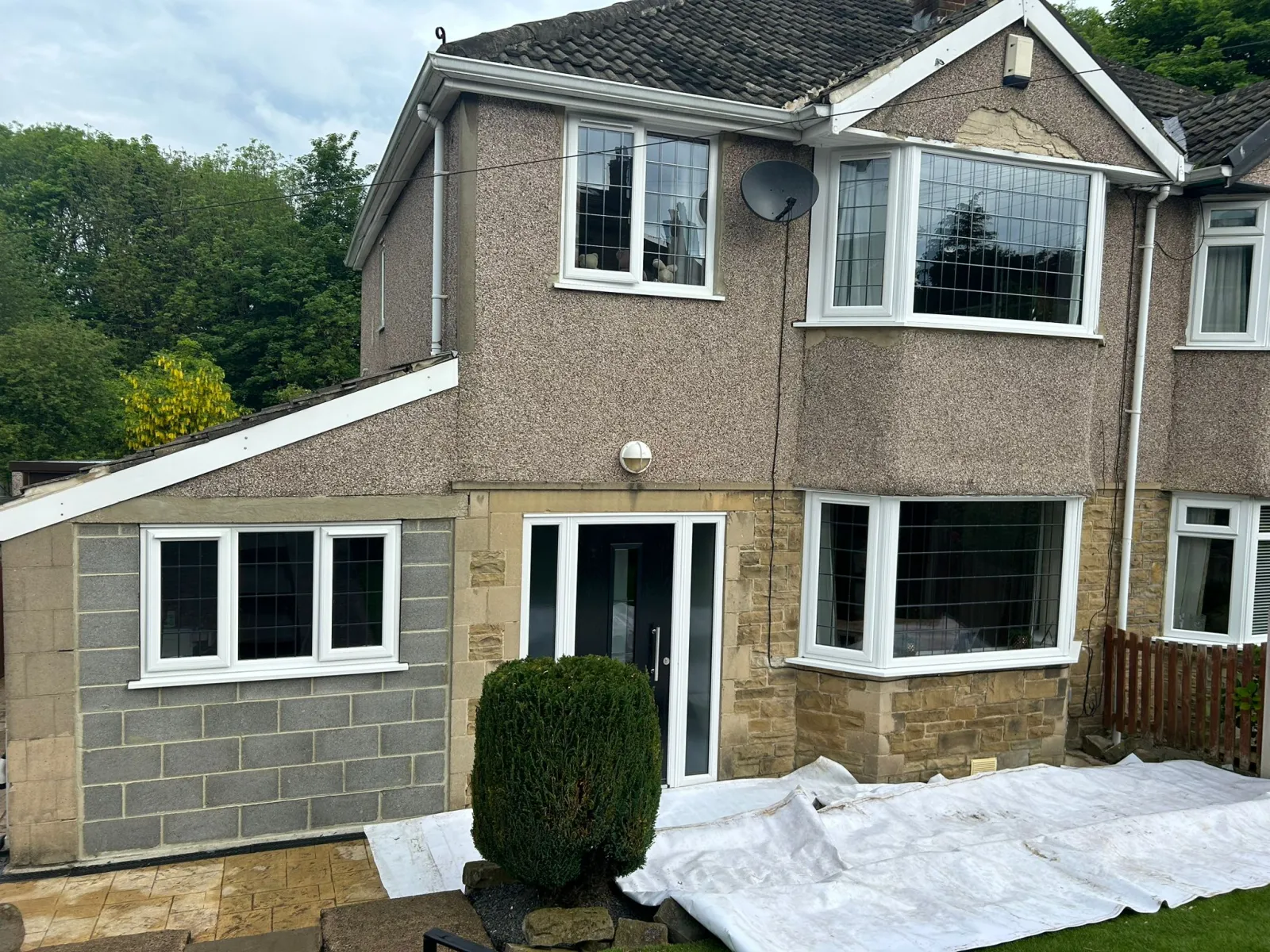
Pebble Dash Removal · Leeds
Pebble Dash Removal in Leeds
Strip tired, crumbling pebbledash and replace it with a smooth, modern render finish — transforming the front of your Leeds home. Free survey, written guarantee.
The transformation
Pebble dash removal & re-rendering
Dated pebbledash cracks, stains and traps damp — and it makes an otherwise good home look tired. We carefully remove old pebbledash and re-render with a smooth, modern silicone finish.
It’s one of the biggest transformations you can make to the front of a Leeds home: a clean, contemporary look, better weather protection, and a finish that’s easy to keep looking good.
Remove dated pebbledash
Carefully stripped back, ready for a fresh, modern render.
Smooth modern finish
Re-rendered in silicone for a clean, contemporary look.
Fix damp & cracks
A proper render system helps shed water and protect the wall.
Kerb appeal
Transform the front of your home and lift its appearance instantly.
Premium render
Finished with K Rend, Weber or Parex systems to suit your home.
Guaranteed
Surveyed, finished properly and guaranteed in writing.
Years on the tools
rendering Leeds homes
Homes rendered
across Leeds & West Yorkshire
Google rating
from 19 genuine reviews
How it works
From first call to finished render — no surprises
A simple, honest process. You'll know exactly what's happening and what it costs before we lift a trowel.
Free survey
We visit your home, assess the walls and listen to what you want to achieve.
Honest advice
We tell you what your home actually needs — and which render system suits it best.
Written quote
A clear, itemised quote with no hidden costs and no pushy sales.
Expert application
K Rend, Weber or Parex applied properly by Andy's team — tidied up every day.
Clean finish
Scaffolding down, site spotless, and your work guaranteed in writing.
Premium systems
We install K Rend, Weber & Parex render systems
Yorkshire weather tests every wall. That's why we work with the render systems we trust to stand up to it — and why we'll always explain which one suits your home.
K Rend
The UK's most popular through-coloured silicone render. It repels water, resists algae and stays looking fresh for years — with no repainting.
Weber
Weber's monocouche and silicone systems give a durable, low-maintenance finish in a wide range of colours and textures.
Parex
Flexible and crack-resistant — a proven choice for solid walls and external wall insulation systems.
Silicone render systems are designed for a 25-year service life, and manufacturer-backed warranties are available on qualifying installations.
What we do
Rendering & exterior services across Leeds
From a full silicone re-render to repairs and pebble-dash removal — we'll tell you what your home actually needs, not what costs the most.
House Rendering
Full exterior render that transforms and protects your home for decades.
Learn more →Silicone Render
Flexible, water-repellent, crack-resistant — and it doesn't need repainting.
Learn more →K Rend Systems
The UK's leading through-coloured silicone render system, applied properly.
Learn more →External Wall Insulation
Insulate and render in one — warmer home, weatherproof finish.
Learn more →Pebble Dash Removal
Strip dated, crumbling pebbledash and replace with a smooth modern finish.
Learn more →Monocouche Render
Through-coloured one-coat render with a clean, contemporary look.
Learn more →Render Repairs
Cracks, blown render and damp patches put right — before they spread.
Learn more →Plastering
Smooth internal plastering and skimming for a flawless finish.
Learn more →We also offer roofing, fascia & soffits, joinery and bespoke media walls. We render homes right across Leeds & West Yorkshire — including Wakefield, Bradford, Harrogate, Pudsey and Horsforth.
"What an amazing job Andy and his team did on the front of our house. We had both the front and back rendered. Looks fantastic. Thank you!"Verified Google review · Leeds
"Leeds Rendering recently re-plastered our entire house, added coving, replaced the skirting boards and our gutters — and did a fantastic job throughout."Verified Google review · Leeds
Common questions
Straight answers, no jargon
Thinking about rendering your home? Here are the questions we hear most — and our honest answers.
Ask Andy a questionHow much does rendering cost in Leeds?
Will the render crack?
How long will it last?
How long does the work take?
Will it be messy?
How do I know you're reliable?
Can't I just paint the walls instead?

Ready to transform and protect your home?
Book a free, no-obligation survey. We'll assess your walls, recommend the right render system, and give you an honest written quote — straight advice from Andy, no pushy sales.
★★★★★ Rated 5.0 on Google · 20+ years rendering Leeds homes · Work guaranteed in writing